
Top 10 Suction Vacuum Pump Suppliers for Global Buyers
Choosing a reliable suction vacuum pump supplier requires more than comparing catalog prices. Global buyers must examine performance, materials, maintenance support, delivery capability, and application experience. A pump used for packaging may need different airflow and vacuum levels than one serving medical equipment, laboratory systems, or industrial automation.
This guide introduces the Top 10 Suction Vacuum Pump Suppliers for Global Buyers. It focuses on manufacturers and distributors with visible technical expertise, established market experience, and practical support for international customers. Key evaluation points include pump type, ultimate vacuum, flow rate, noise control, energy use, spare-parts access, warranty terms, and documented quality systems. These details matter when a pump operates for long hours beside a production line.
Numbers can mislead.
A supplier may advertise impressive vacuum pressure while offering limited service in a buyer’s region. Another may provide excellent engineering but longer lead times. Product data can also vary between test conditions and real installations. This guide therefore considers evidence from company information, technical documentation, product ranges, customer support, and industry reputation. It does not treat every supplier as equally suitable.
Readers should verify specifications directly before purchasing. Site altitude, gas composition, duty cycle, temperature, and installation design can change the final choice. Even experienced buyers occasionally overlook these factors. That is worth remembering. The best Suction Vacuum solution is not always the cheapest or most powerful option. It is the one that delivers stable performance, manageable operating costs, and dependable support throughout its working life.
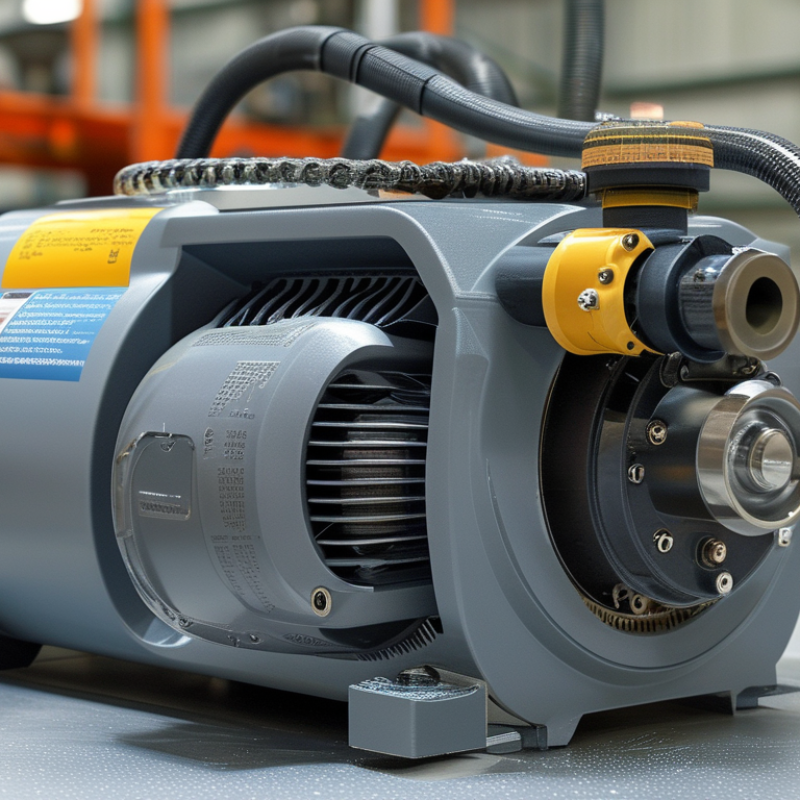
What Suction Vacuum Pumps Are and How They Work
What Suction Vacuum Pumps Are and How They Work
A suction vacuum pump removes air or gas from a sealed space. This lowers internal pressure and creates the vacuum needed for movement, lifting, drying, or filtration. Unlike a standard water pump, it does not simply push liquid through a pipe. It changes pressure conditions.
The working process is practical. A motor turns the pump’s internal parts, such as a rotor, diaphragm, or piston. These parts expand a chamber and draw gas through the inlet. They then compress the trapped gas and release it through the outlet. Repeated cycles gradually reduce pressure inside the connected system.
Small details affect performance. A loose hose connection can admit air and weaken suction. Moisture, dust, and unsuitable oil may also damage internal components. In industrial testing, technicians often check vacuum level, airflow, noise, temperature, and power consumption. One reading is not enough. Pressure can look acceptable while flow remains poor.
Different pump designs suit different duties. Diaphragm pumps handle many clean, low-flow applications and avoid oil contamination. Rotary pumps can provide stronger, steadier vacuum performance, but maintenance becomes more demanding. Liquid-ring designs tolerate vapor better, although they require proper liquid management.
The term “suction vacuum pump” can be confusing. It describes a function more than one exact machine type. Buyers should match the pump with gas composition, target vacuum, flow rate, operating hours, and moisture exposure. A common mistake is choosing by motor power alone. That approach seems simple, but it often produces inefficient or unstable operation.
| Rank | Supplier Profile | Primary Pump Types | Typical Ultimate Vacuum | Typical Flow Capacity | Operating Principle | Common Applications | Key Buyer Considerations |
|---|---|---|---|---|---|---|---|
| 01 | European Industrial Supplier | Rotary Vane Oil-lubricated and oil-free models |
Approximately 0.1–1 mbar for common two-stage designs | 2–500 m³/h | A rotating eccentric rotor moves gas through inlet and exhaust valves. Oil provides sealing, cooling, and lubrication in lubricated models. | Vacuum packagingLaboratory equipmentFood processing | Check oil compatibility, exhaust filtration, noise level, and service-kit availability. |
| 02 | North American Process-Vacuum Supplier | Dry Screw Variable-speed industrial systems |
Approximately 0.01–1 mbar, depending on configuration | 50–2,500 m³/h | Intermeshing screw rotors transport gas without oil entering the compression chamber, making the design suitable for clean or corrosive processes. | Semiconductor processesChemical processingCoating | Evaluate purge-gas requirements, corrosion resistance, power consumption, and inlet-particle protection. |
| 03 | East Asian Compact-Pump Supplier | Diaphragm Oil-free laboratory pumps |
Approximately 1–100 mbar | 0.5–120 m³/h | A flexible diaphragm changes chamber volume while valves control gas direction. The pumped gas remains isolated from lubricants. | FiltrationRotary evaporationMedical devices | Confirm chemical resistance, diaphragm material, vapor tolerance, and replacement frequency. |
| 04 | Global Liquid-Ring Supplier | Liquid-Ring Single-stage and two-stage units |
Approximately 30–100 mbar with water at suitable temperature | 20–10,000 m³/h | An impeller forms a rotating liquid ring that creates sealed gas chambers. The liquid also absorbs heat and can handle wet gas streams. | Power generationPulp and paperWastewater treatment | Consider seal-liquid quality, water consumption, discharge treatment, and corrosion protection. |
| 05 | Industrial Blower and Vacuum Supplier | Roots Booster Booster packages with backing pumps |
Approximately 0.001–10 mbar when paired with a suitable backing pump | 100–10,000 m³/h | Two counter-rotating lobes move gas from inlet to outlet. The booster normally operates with a backing pump because it has limited compression capability by itself. | Vacuum dryingMetallurgyLarge chambers | Match booster size with backing-pump capacity and check maximum differential-pressure limits. |
| 06 | Precision Vacuum Equipment Supplier | Scroll Oil-free fixed and variable-speed models |
Approximately 0.01–1 mbar | 1–60 m³/h | Two interleaved spiral scrolls compress gas continuously; one scroll orbits while the other remains fixed. The compression chamber is typically oil-free. | Mass spectrometryResearchAnalytical instruments | Review tip-seal replacement intervals, water-vapor handling, ultimate pressure, and vibration performance. |
| 07 | Central European Claw-Pump Supplier | Dry Claw Oil-free industrial vacuum pumps |
Approximately 0.05–10 mbar, depending on stage design | 20–1,000 m³/h | Non-contacting claw-shaped rotors transport and compress gas in a dry chamber, reducing contamination and routine oil maintenance. | Pneumatic conveyingPlastics handlingPackaging | Assess dust filtration, condensable-vapor management, operating temperature, and motor efficiency. |
| 08 | Compressed-Air Vacuum Supplier | Venturi Ejector Single-stage and multi-stage ejectors |
Approximately 20–200 mbar, depending on nozzle and supply conditions | Gas-flow performance varies with compressed-air pressure and nozzle size | Compressed air accelerates through a nozzle, creating a low-pressure zone that entrains and removes the suction gas. There are no moving parts. | Robotic grippingPick-and-placeMaterial handling | Compare compressed-air consumption, generator response time, sound level, and leakage sensitivity. |
| 09 | High-Throughput Piston Supplier | Piston Oil-free and lubricated reciprocating models |
Approximately 20–200 mbar for many industrial configurations | 1–300 m³/h | A reciprocating piston changes chamber volume and uses inlet and outlet valves to draw in and discharge gas. Multiple cylinders can increase capacity. | PrintingCNC workholdingMedical suction | Check pulsation, duty cycle, cooling requirements, vibration isolation, and piston-seal maintenance. |
| 10 | High-Vacuum Rotary Supplier | Turbomolecular High-vacuum systems with backing pumps |
Approximately 10⁻⁷–10⁻¹⁰ mbar, depending on model and system design | 50–5,000 L/s for nitrogen-equivalent pumping speed | High-speed rotor blades transfer momentum to gas molecules, moving them toward the backing-pump outlet. The pump requires a sufficiently low inlet pressure before startup. | Surface analysisElectron microscopyThin-film deposition | Verify backing-pump compatibility, rotor speed, vibration, cooling, venting procedure, and controller requirements. |
Related Posts
-
How to Choose the Best Jib Crane Vacuum Lifter?
-
Top Vacuum Lifters For Stone Slabs in 2026 What to Know?
-

5 Key Reasons Why Best Heavy Equipment is Essential for Maximizing Construction Efficiency
-

How to Choose the Right Material Lift for Your Needs?
-

The Definitive Guide to Mastering Sheet Lifters for Your Industrial Needs
-
Top Strategies for Maximizing Efficiency with the Best Chain Hoists


