What Are the Top Material Handling Products for 2026?
In 2026, the best Material Handling Products will be the ones that solve real bottlenecks, not simply the ones with the newest features. Distribution centers face mixed demands: faster order cycles, changing product sizes, and tighter floor space. Conveyors, automated guided vehicles, autonomous mobile robots, lift trucks, palletizers, and storage systems each serve different needs. The right choice depends on workflow, load profiles, aisle width, and maintenance capacity. Small details matter.
Production-system expert Taiichi Ohno wrote, “All we are doing is looking at the time line, from the moment the customer gives us an order to the point when we collect the cash.” His observation is about flow, not a particular machine. Yet it offers a useful test for equipment decisions: does a product reduce waiting, needless travel, or handling risk across the operation? A fast robot cannot fix a poor layout by itself.
This outline examines leading product categories for 2026, including automation, storage, lifting, and warehouse control technologies. It will consider practical measures such as throughput, integration needs, operator training, service access, and total cost of ownership. It will also distinguish proven applications from claims that still need careful testing. Forecasts can be wrong. A product that looks efficient in a demonstration may behave differently on a crowded floor, during peak season, or around awkward loads. The goal is not to crown one universal winner, but to identify options that fit specific work.
Material Handling Products: Scope, Purpose, and Main Categories
Material handling covers the equipment and systems used to move, store, protect, and track materials inside a facility. Its purpose is practical: keep goods flowing between receiving docks, production lines, storage locations, and shipping areas. The right setup can reduce unnecessary travel, product damage, and manual lifting. It cannot fix a poorly planned workflow by itself.
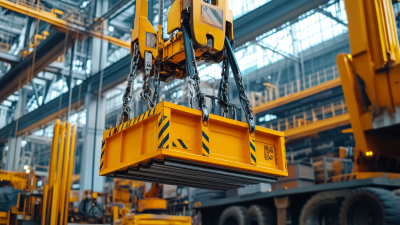
Main categories include transport equipment, such as pallet trucks and forklifts; conveyors and sorters; lifting devices, including hoists and cranes; and storage systems, from shelving to automated storage and retrieval. Scanners and inventory software help identify goods and direct movement. MHI’s 2024 Annual Industry Report found that 55% of surveyed organizations planned to increase supply chain technology investment over the next five years. That signals interest, not guaranteed results.
Selection starts with the load. A pallet of boxed goods needs different support from long steel stock or fragile components. Check aisle width, floor conditions, travel distance, lift height, and peak throughput before choosing equipment. Small details matter. A conveyor may speed up one process but create a queue at packing. Automated systems can also demand maintenance skills and space. Sometimes the simplest tool is the better fit. It is worth measuring real work patterns before investing.
Core Equipment for Moving and Storing Materials in 2026
What Are the Top Material Handling Products for 2026?
Core Equipment for Moving and Storing Materials in 2026
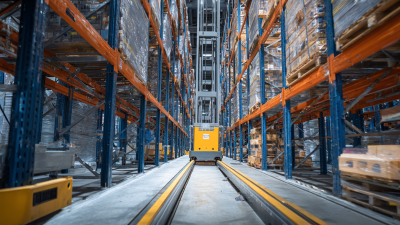
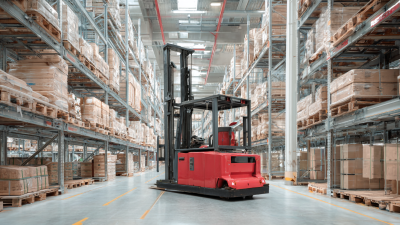
In 2026, effective material handling starts with matching equipment to the load, route, and storage layout. Forklifts and powered pallet trucks move palletized goods; conveyors keep repetitive flows moving between work areas. For storage, selective pallet racks offer direct access, while automated storage and retrieval systems can use vertical space more densely. Mobile robots may help with repeatable transport, but they still need clear routes and well-defined handoffs. Small details matter.
The investment case is growing, though forecasts are not guarantees. MHI’s 2024 Annual Industry Report found that 55% of surveyed companies planned to increase supply-chain technology investment. Grand View Research valued the global material-handling equipment market at about $224.4 billion in 2023 and projected a 5.5% compound annual growth rate from 2024 to 2030. Those figures point to continued interest, not a universal need to automate. A narrow aisle, uneven floor, or mixed pallet sizes can undermine a costly system. Measure peak throughput, load dimensions, travel distance, and maintenance capacity before choosing equipment. The less exciting option may fit better. A simple pallet truck can outperform a complex system in a low-volume area, while high-throughput operations may benefit from conveyors or automated storage.
What Are the Top Material Handling Products for 2026?
Representative load capacities of core equipment for moving materials
These examples reflect common nominal capacities: hand pallet trucks (2.5 t), electric pallet trucks (2.0 t), counterbalance forklifts (3.0 t), reach trucks (1.6 t), and walkie stackers (1.2 t). Actual capacities vary by model, configuration, and load center; always check the equipment rating plate.
Automation and Robotics Products for Modern Material Handling
What Are the Top Material Handling Products for 2026?
Automation and Robotics Products for Modern Material Handling
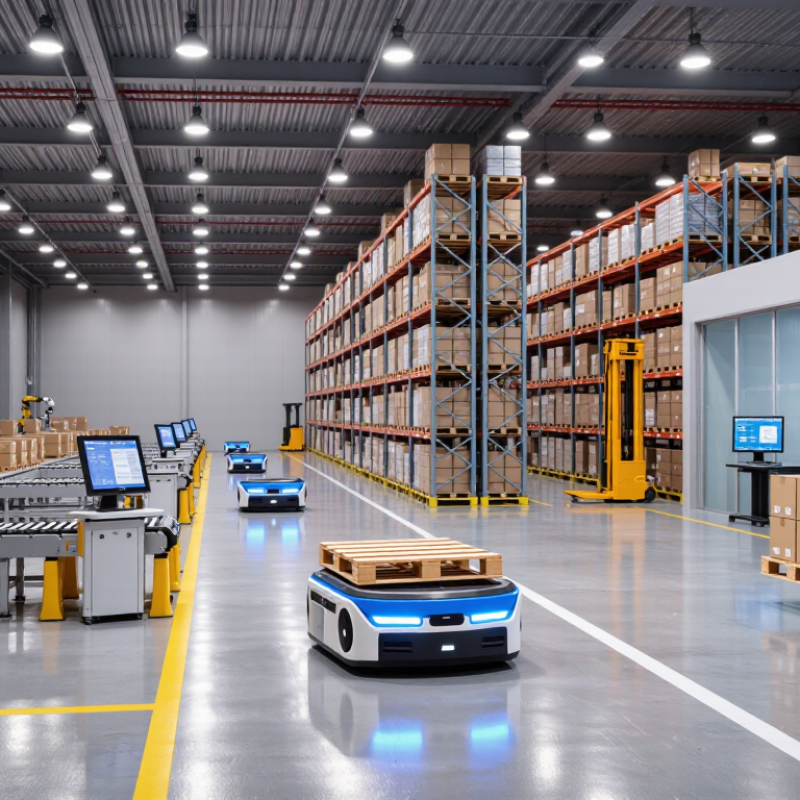
Modern material handling depends on products that move goods safely, predictably, and with less wasted motion. Autonomous mobile robots can carry totes between picking zones and packing stations. They use onboard sensors to navigate around people, carts, and temporary obstacles. Robotic palletizers also help stack mixed cases, especially when order volumes change throughout the day. Small details matter. Floor markings, load stability, and clear traffic routes can affect performance as much as the equipment itself.
Goods-to-person systems bring shelves or containers to workers, reducing long walks across a warehouse. Conveyor systems with scanners and sensors can identify parcels, measure flow, and flag jams before they stop a line. These tools work best when connected to inventory and warehouse software, so teams can track tasks and respond to bottlenecks. Not every task fits. Irregular packaging or frequently changing workflows may still need human judgment, and automation can struggle when item data is incomplete.
A practical 2026 setup may combine mobile robots, assisted picking, and targeted conveyor upgrades rather than automate every process at once. Start with repeated, measurable tasks, then review travel time, error rates, and maintenance needs. The numbers can reveal surprises. A pilot may run smoothly in one zone but expose congestion elsewhere. Regular staff feedback helps identify those gaps and keeps improvements grounded in daily operations.
How to Compare Material Handling Products for Different Operations
For 2026, the top material handling products are not automatically the most advanced ones. The useful choice depends on the work: a compact storeroom has different needs from a busy loading dock. Start by recording typical load weight, pallet dimensions, travel distance, aisle width, and hourly volume. Measure twice. A comparison based only on maximum capacity can miss awkward loads or tight turning points.
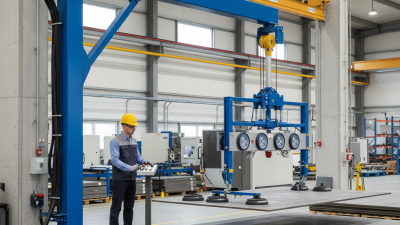
A manual pallet jack can suit short, occasional moves on smooth floors. Powered pallet trucks reduce pushing over longer routes, but need charging space and routine battery checks. Forklifts handle varied loads and heights; compare their turning radius, lift capacity at working height, and operator visibility. Conveyors can keep repeatable routes moving, yet fixed layouts may complicate seasonal changes. Lift tables help bring work to a safer height, while carts offer flexibility for smaller batches.
Check the floor condition, door clearances, ramps, and handoff points before requesting quotes. Ask suppliers for duty-cycle guidance, service intervals, spare-part availability, and operator training details. A trial with real loads can reveal bottlenecks a specification sheet will not show. One weakness in many comparisons is overvaluing speed. Faster equipment may simply move congestion to the next station. Track travel time, waiting, and minor handling adjustments during a normal shift; the records may be imperfect, but they are more useful than guesses.
Key Trends Shaping Material Handling Equipment in 2026
Material handling in 2026 is moving toward connected, flexible equipment rather than one-size-fits-all systems. Automated mobile units, smart conveyors, and sensor-equipped lifts can help teams track loads and reduce repetitive travel. The useful change is practical: operators can see where a tote is, while supervisors spot congestion before a queue blocks an aisle. Small details matter. Reliable floor data and clear safety procedures still determine whether automation works well.
Electrification is also shaping equipment choices. Battery-powered forklifts and pallet trucks can reduce on-site exhaust and often operate more quietly indoors. Charging schedules, battery capacity, and shift length need careful review before replacing a fleet. A machine that runs out of charge during a busy shift is not an upgrade. Energy use should be measured alongside throughput, maintenance needs, and operator comfort.
Ergonomic features are receiving more attention, including adjustable controls, easier-to-read displays, and equipment that reduces awkward lifting. These changes can make daily work less tiring, though they cannot fix poor storage layouts or unrealistic workloads. Start with a small pilot: track travel distance, picking errors, downtime, and worker feedback over several weeks. The numbers may challenge expectations. Some facilities may find that better rack placement delivers more value than another automated tool, and that is worth admitting.