
7 Water Line Coupler Buying Tips
Choosing a Water Line Coupler is not just a matter of matching two pipe ends. The right fitting must suit the pipe material, connection method, water pressure, and installation conditions. A coupler that looks correct on a shelf may still leak if its dimensions or seal are wrong.
In this introduction, fictional water-systems specialist Dana Mercer offers an illustrative reminder, not a documented quotation: “Check the pipe, the pressure, and the seal before you trust the connection.” It is a simple rule. Still, real installations can be less tidy than product diagrams suggest. A pipe may be slightly out of round, a cramped cabinet may limit tool access, or an old seal may look usable when it is not.
The seven buying tips ahead focus on practical checks: compatibility, sizing, materials, pressure ratings, connection style, certification information, and maintenance access. Look closely at the manufacturer’s specifications, and compare them with the actual pipe—not just the label on its packaging. If measurements are uncertain, pause and verify them before buying. That small delay can prevent a frustrating return trip and help avoid drips behind a wall or under a sink. No single coupler fits every setup. The best choice is the one that matches the system and can be installed correctly. Even careful buyers can miss a detail, so a final compatibility check is worth the effort.
Understand the Role of a Water Line Coupler
7 Water Line Coupler Buying Tips
Understand the Role of a Water Line Coupler
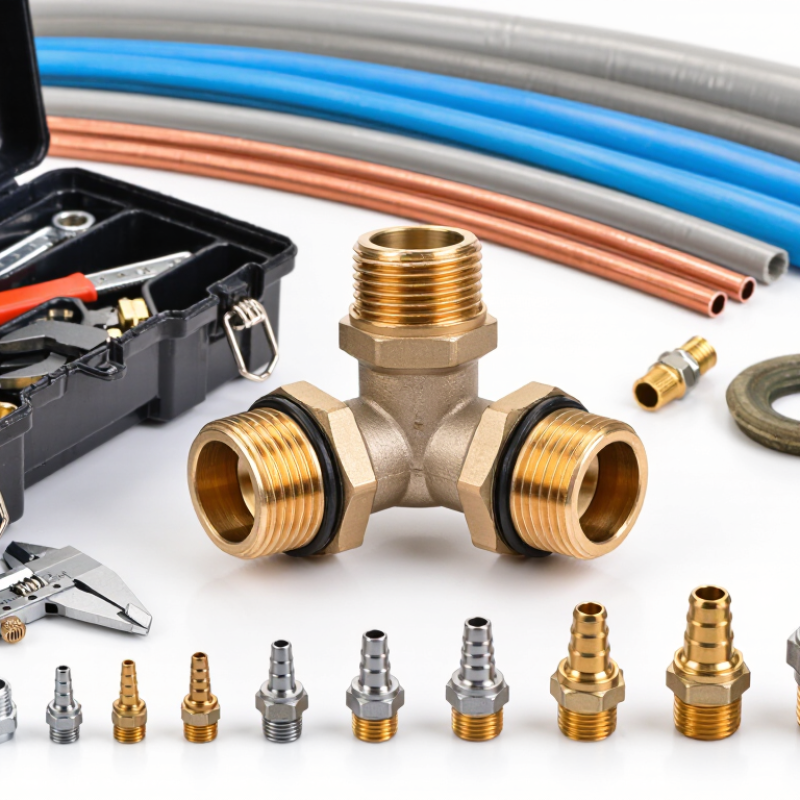
A water line coupler joins two sections of tubing or pipe, creating a continuous path for water. It also helps maintain a sealed connection where lines meet. In a cabinet, that may mean linking a supply tube to a fixed pipe behind a sink. The part is small, but a poor fit can lead to drips, pressure loss, or repeated repairs.
The U.S. Environmental Protection Agency’s WaterSense program reports that household leaks can waste nearly 10,000 gallons of water annually; about 10 percent of homes have leaks wasting 90 gallons or more each day. These figures cover many kinds of leaks, not couplers alone. Still, they show why checking each connection matters. A coupler should match the line material, diameter, thread type, and operating conditions. Similar-looking fittings may not seal together.
Fit matters. During installation, keep the connection aligned and follow the fitting maker’s tightening guidance; excessive force can damage threads or deform a seal. After turning the water back on, dry the joint and check it with a tissue. Even a slow bead can reveal a problem. I’d also recheck after normal use, since a connection that looks dry immediately may behave differently under pressure. EPA WaterSense, “Fix a Leak Week” and household leak guidance.
Match the Coupler to Pipe Size and Connection Type
A water-line coupler must match the pipe’s measured size and joining method; “same size” on packaging can mislead. Measure the pipe’s outside diameter, then confirm its material and nominal size against the fitting specifications. Copper, PEX, PVC, and CPVC have different dimensions and connection requirements. For example, 1/2-inch nominal copper pipe has a 5/8-inch outside diameter. Trusting the label alone can lead to a loose or incompatible fit. This is where rushed buying slips. Check whether the coupler uses solder, crimp, press, compression, push-fit, or threaded connections, and use compatible transition fittings.
Match each connection end precisely: male to female threads, the correct thread standard, or a socket designed for the pipe. NPT and BSP threads can look similar, but should not be forced together. Verify the fitting’s pressure and temperature ratings, especially near pumps or water heaters. The U.S. EPA’s WaterSense program estimates household leaks waste nearly 10,000 gallons of water yearly. It also reports that about 10% of homes have leaks wasting 90 gallons or more daily. These are broad household estimates, not coupler-specific test results. So check fit twice. Old paint, scale, or an oval pipe end can also distort measurements; clean and inspect the pipe before choosing.
Choose Materials for Water Quality and Environment
7 Water Line Coupler Buying Tips
Choose Materials for Water Quality and Environment
Water quality should guide your coupler choice, not appearance alone. For drinking-water lines, check that the material is approved for potable use in your area. Brass can be durable, but water chemistry may affect some alloys over time. Stainless steel resists corrosion, though its performance depends on grade and conditions. Check the rating. For acidic or mineral-rich water, confirm compatibility with the coupler maker’s specifications instead of guessing from a product photo.
The installation environment matters just as much. Sunlight can age some plastics, while heat and pressure may exceed their rated limits. Stainless steel may suit damp outdoor locations, but salt air can still cause corrosion. For buried lines, consider soil conditions and follow the specified installation method. It is tempting to choose the toughest-looking material; that is not always the best fit. Compare water chemistry, temperature, pressure, and exposure together. I would also recheck those details before ordering—small assumptions can mean a poor match.
7 Water Line Coupler Buying Tips - Choose Materials for Water Quality and Environment
Use this guide to shortlist materials. Compatibility and performance depend on the exact coupler, seals, water chemistry, operating conditions, and local plumbing requirements; verify the product specifications before buying.
| Buying tip | Water or environment | Materials to consider | What to check | Practical buying note |
|---|---|---|---|---|
| 1. Confirm potable-water approval | Drinking-water systems | Approved brass, stainless steel, or potable-water-rated polymers | Applicable local approvals; NSF/ANSI/CAN 61 for health effects and, where required, NSF/ANSI/CAN 372 for lead content | Check that the certification applies to the specific fitting and intended use, not only to a similar material. |
| 2. Match the seal to disinfectants | Chlorinated or chloraminated municipal water | Seal compounds such as EPDM or other specified elastomers; compatible metal or polymer body | Seal-maker compatibility data for disinfectant type, concentration, temperature, and exposure time | Do not assume all rubber seals perform alike; the seal may determine service life even when the body material is suitable. |
| 3. Account for pH and dissolved minerals | Acidic, alkaline, hard, or mineral-rich water | Materials selected for the measured water chemistry; corrosion-resistant alloys or compatible polymers may be options | Water pH, chloride content, hardness, and manufacturer compatibility limits | If water chemistry is unusual or changes seasonally, use test results and consult the fitting supplier or a water-treatment professional. |
| 4. Treat salt exposure as a corrosion risk | Brackish water, coastal air, or seawater service | Chloride-resistant materials specified for the application; 316 stainless steel is generally more resistant to chloride corrosion than 304, but is not immune to seawater attack | Exact alloy, crevice exposure, water velocity, temperature, and service conditions | For continuous seawater contact, choose a coupler explicitly rated for that service rather than relying on alloy grade alone. |
| 5. Check sunlight and weather exposure | Outdoor, above-ground, or exposed installations | UV-stabilized polymer or a suitable metal coupler; protective covering where required | UV and weathering rating, installation instructions, and permitted exposure conditions | A polymer suitable for buried use may not be suitable for prolonged direct sunlight; confirm the intended installation location. |
| 6. Verify pressure and temperature ratings | Hot water, pressure fluctuations, or freeze-prone areas | Any material only when the complete coupler-and-seal assembly is rated for the conditions | Maximum working pressure at operating temperature, temperature range, and any pressure derating | Use the rating for the exact model and size. A pressure rating does not mean the fitting is safe from damage if water freezes inside it. |
| 7. Avoid incompatible metal connections | Mixed-metal pipework or damp installation sites | Compatible metals, dielectric isolation where appropriate, or a suitable nonmetallic transition fitting | Metal combination, water conductivity, moisture exposure, and applicable plumbing code | Dissimilar metals in electrical contact can promote galvanic corrosion under suitable conditions; follow the fitting and piping-system instructions. |
Final check: match pipe material, outside diameter or nominal size, connection type, seal material, and local code requirements before installation.
Verify Pressure, Temperature, and Safety Ratings
A water-line coupler can look solid and still fail when its ratings do not match the system. Check the maximum working pressure, not just a burst-pressure figure. Pumps, valves, and quick shutoffs can create brief pressure spikes. Static pressure is only part of the picture. Leave a sensible margin for these changes, especially in systems that cycle often.
Temperature matters, too. Read the coupler’s stated operating range and compare it with both the water temperature and nearby conditions. A line beside a heater may experience more heat than a room-temperature test suggests. Confirm that the rating applies to the intended fluid and connection materials. If the documentation is unclear, pause and ask the supplier; guessing feels quick, but it is a weak basis for a safety decision. Look for applicable independent safety or material certifications, and verify that the exact coupler size and configuration are covered.
Tips: Match working pressure to the system. Allow for pressure surges. Check hot and cold limits. Confirm fluid compatibility. Verify certification scope. Inspect seals and threads. Recheck ratings after changing the setup. Ratings help narrow the choice, but they cannot correct a mismatched fitting or poor installation.
7 Water Line Coupler Buying Tips: Verify Pressure, Temperature, and Safety Ratings
Compare the coupler’s published working-pressure rating with your system requirements. This chart converts PSI to bar using 1 PSI = 0.0689476 bar; it is a unit-conversion reference, not a recommended operating range.
- Check the working-pressure rating—not just the burst-pressure rating.
- Confirm the pressure rating covers your system’s operating conditions.
- Verify the coupler’s rated temperature range for the water supply.
- Match the coupler material to the intended water use and environment.
- Confirm the connection type, size, and thread standard.
- Look for applicable safety and drinking-water approvals when required.
- Follow the manufacturer’s installation and maintenance instructions.
Compare Installation Needs, Durability, and Maintenance
A water line coupler should match the pipe material, outside diameter, thread type, and operating pressure. Check the manufacturer’s pressure and temperature ratings against the actual system, not just the appliance connection. For drinking-water lines, look for components certified to NSF/ANSI/CAN 61, which addresses health effects from materials in contact with drinking water. A coupler that fits but lacks the right rating is not a dependable choice.
Installation needs shape the best design. Compression fittings can be practical where a torch is unsuitable, while threaded connections may simplify later removal. Push-fit couplers can save space, but the pipe end must be cut square and deburred; even a small burr can damage an internal seal. Measure twice. Access matters, too: a joint hidden behind a cabinet is harder to inspect than one near a shutoff valve.
Durability depends on water chemistry, temperature, vibration, and exposure to cleaning products. Compare seal materials and corrosion resistance, then check whether replacement seals are available. The U.S. EPA WaterSense program reports that household leaks can waste nearly 10,000 gallons of water annually; that figure covers leaks broadly, not couplers alone. Still, it shows why periodic checks matter. Look for moisture, mineral deposits, or a faint hiss after installation. I would not assume a dry joint on day one proves long-term reliability; inspection after a few weeks is easy to forget, but useful.