
7 Tips for Choosing a Carbon Steel Pipe Manufacturer
Choosing the right Carbon Steel Pipe Manufacturer can determine whether a project runs smoothly or suffers costly delays. Pipe may look identical on a warehouse floor, yet its wall thickness, heat treatment, weld quality, and traceability can differ significantly. A reliable supplier should provide clear mill test certificates, consistent dimensions, and evidence of pressure testing. Ask where the steel was produced. Ask how each batch is identified.
Dr. W. Edwards Deming, a leading manufacturing quality expert, stated, “Quality comes not from inspection, but from the improvement of the production process.” This principle matters when evaluating a Carbon Steel Pipe Manufacturer. A final inspection cannot fully repair poor raw materials or unstable production controls. Look for documented procedures, calibrated equipment, trained technicians, and a history of meeting recognized standards. Certifications are useful, but they are not the whole story.
Real experience often appears in small details. Does the supplier protect pipe ends during transport? Can it explain coating thickness in practical terms? Will it share references from projects with similar pressure, temperature, and diameter requirements? Seven careful checks can expose weaknesses before money and time are committed.
No checklist is perfect. A polished website may still hide weak traceability. A lower quotation may also exclude testing, packaging, or inspection support. Compare the complete supply promise, not only the unit price. The following tips examine capacity, materials, compliance, quality control, delivery reliability, communication, and after-sales responsibility. Choose evidence over impressive claims.
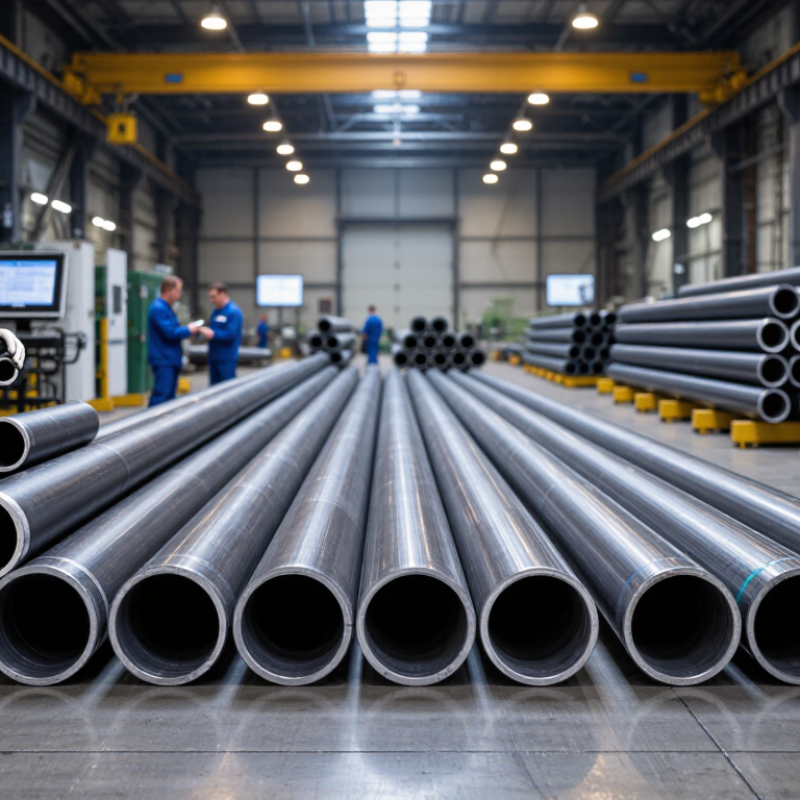
Understanding Carbon Steel Pipe Grades and Applications
Choosing a carbon steel pipe manufacturer starts with understanding grades, not glossy promises. A suitable supplier should explain chemistry, strength, wall thickness, and service limits clearly. ASTM A53 often suits water, air, and general mechanical systems. ASTM A106 is commonly selected for elevated-temperature service. API 5L grades support many oil, gas, and process pipelines. However, a familiar grade is not automatically the correct grade.
Ask seven practical questions during supplier evaluation. Can the manufacturer provide heat numbers and complete material certificates? Does its laboratory verify tensile strength, yield strength, and chemical composition? Are ultrasonic or hydrostatic tests available when the project requires them? Can it control outside diameter and wall thickness consistently? Request recent inspection records. Check welding procedures. Review its response to nonconforming pipe.
Application details should guide every decision. Low-pressure water lines may need different performance than steam, structural columns, or buried transmission pipe. Consider temperature, corrosion, pressure, welding method, and installation environment. A thicker wall may improve service life, but it can increase weight and fabrication costs. That trade-off is easy to overlook. In field reviews, unclear grade markings have caused avoidable delays and expensive retesting. I once treated documentation as secondary; that was a mistake. Reliable manufacturers welcome independent inspection and explain limitations without exaggeration. Choose evidence over confidence.
7 Tips for Choosing a Carbon Steel Pipe Manufacturer
Understanding Carbon Steel Pipe Grades and Applications
The chart compares representative minimum specified yield strengths for widely used carbon steel pipe grades. Higher-strength API 5L grades are commonly selected for oil and gas transmission, while ASTM A53 and A106 grades are frequently used for structural, water, steam, and process piping. Actual selection should also consider dimensions, wall thickness, temperature, corrosion conditions, testing, and certification requirements.
Checking Manufacturer Quality Systems and Industry Certifications
A reliable carbon steel pipe manufacturer should show more than a polished website. Ask to review its quality management certificate, issuing body, validity date, and covered production sites. ISO 9001 can indicate controlled processes, but it does not guarantee every pipe meets your project requirements. Check the certificate scope carefully. It may exclude testing, coating, or outsourced operations.
Tip 1: Request a sample quality plan before placing an order. It should identify material inspection, welding controls, dimensional checks, hydrostatic testing, and non-destructive examination. Ask how technicians record results and handle failed tests. A clear corrective-action process matters. Small details often reveal real discipline.
Tip 2: Confirm relevant industry certifications and product standards. Depending on the application, this may include API, ASTM, ASME, or regional requirements. Verify each certificate through the official issuing organization when possible. Do not rely on scanned documents alone. During a factory visit, compare heat numbers on pipes, inspection reports, and material certificates. Traceability should follow the pipe from steel billet to shipment. Calibration labels on pressure gauges and testing equipment also deserve attention. I have found that paperwork can look complete while process evidence remains thin. That is an uncomfortable warning, but it deserves discussion. Ask for recent audit findings, not only successful certificates. Good manufacturers can explain weaknesses and show how they corrected them.
Evaluating Production Capacity, Technology, and Customization Options
Choosing a carbon steel pipe manufacturer requires more than comparing quotations. Production capacity should match your project schedule and required pipe sizes. Ask for monthly output, furnace capacity, forming lines, and recent delivery records. A large facility is not automatically reliable. An overloaded factory may delay your order.
Technology affects consistency. Check whether the manufacturer controls chemical composition, wall thickness, heat treatment, and surface condition at each stage. Request test reports, calibration records, and traceability from raw material to finished pipe. Independent inspections can add confidence. Also review how defects are handled. A clear corrective-action process reveals professional discipline. In practice, a polished factory tour can still hide weak documentation.
Customization deserves equal attention. Confirm available outside diameters, wall thicknesses, lengths, bevels, coatings, and end treatments before signing specifications. Ask for a sample or trial batch when tolerances are tight. The manufacturer should explain what is technically feasible, not simply promise everything. Communication matters here. Slow replies often create costly misunderstandings later. I have found that written drawings, inspection points, and acceptance criteria prevent more problems than friendly conversations. Still, no process is perfect. Leave room for reasonable adjustments after the first production review.
Comparing Material Traceability, Testing, Pricing, and Delivery Terms
7 Tips for Choosing a Carbon Steel Pipe Manufacturer
Comparing Material Traceability, Testing, Pricing, and Delivery Terms
A credible manufacturer should connect every pipe to a specific heat number. Request mill test certificates, production dates, chemistry results, and inspection records. Traceability becomes critical when pipes enter pressure, structural, or corrosive service. In supplier audits, a neat certificate is not enough. Verify that the heat number appears on the pipe, bundle tag, and shipping documents.
Testing should match the project specification, not merely the lowest quotation. Ask about tensile testing, hydrostatic testing, dimensional checks, and non-destructive examination. The World Steel Association reported about 1.88 billion tonnes of crude steel production in 2023. That scale makes independent verification more important, not less. Laboratory accreditation, calibrated equipment, and retained samples improve confidence. Still, testing can miss poor handling after production.
Pricing needs a wider lens. Compare steel grade, wall tolerance, coating, inspection costs, packaging, currency exposure, and quote validity. The association’s 2024 Short Range Outlook forecast global steel demand at 1.772 billion tonnes in 2025, showing how demand shifts can affect input costs. A low price may hide exclusions. I have seen delivery promises change after freight charges moved sharply. Define Incoterms, loading ports, partial shipment rules, and delay remedies in writing. UNCTAD reports that maritime transport carries over 80% of global trade by volume. Port congestion remains a practical risk. Build a realistic buffer. Perfect forecasts do not exist.
7 Tips for Choosing a Carbon Steel Pipe Manufacturer - Comparing Material Traceability, Testing, Pricing, and Delivery Terms
| No. | Selection Tip | What to Compare | Recommended Evidence | Practical Evaluation Point | Common Warning Sign |
|---|---|---|---|---|---|
| 1 | Match the pipe specification to the application | Applicable standard, grade, outside diameter, wall thickness, end finish, and service conditions | A quotation that clearly identifies the applicable specification, grade, dimensions, tolerances, and required supplementary tests | Confirm whether the pipe is intended for structural, pressure, process, water, oil and gas, or mechanical service | A quotation states only “carbon steel pipe” without a recognized standard or grade |
| 2 | Verify heat and material traceability | Heat number, plate or billet origin, chemical composition, mechanical properties, and marking continuity | Material Test Certificate, commonly an EN 10204 3.1 certificate, with heat numbers matching pipe markings and packing records | Ask how the manufacturer preserves traceability after cutting, coating, bundling, or partial shipment | Certificates are generic, lack heat numbers, or cannot be linked to the delivered pipe |
| 3 | Compare testing and inspection coverage | Chemical analysis, tensile testing, yield strength, elongation, hardness, hydrostatic testing, and nondestructive examination | Standard-specific test reports, calibrated equipment records, inspection plans, and independent inspection options where required | Check whether testing is mandatory under the selected standard or must be added as a purchase-order requirement | The supplier uses “fully tested” without identifying test methods, acceptance criteria, or report content |
| 4 | Evaluate manufacturing capability and quality control | Seamless or welded production route, available size range, forming process, heat treatment, coating, and dimensional control | Quality-management certification, process-control documentation, sample inspection records, and evidence of handling similar specifications | Confirm the manufacturer can produce the required size, schedule or wall thickness, length, and end preparation without unapproved substitutions | The supplier relies heavily on subcontracting but does not disclose production or inspection responsibilities |
| 5 | Compare total pricing, not only the unit price | Base pipe price, testing, coating, beveling, packaging, inland transport, export documentation, duties, and payment terms | An itemized commercial quotation with currency, price basis, validity period, minimum order quantity, exclusions, and tax or freight treatment | Compare equivalent grades, dimensions, testing levels, quantities, and delivery terms before ranking offers | A very low price excludes required tests, documentation, packaging, or delivery costs |
| 6 | Review production and delivery terms carefully | Lead time, production start point, inspection hold points, port or warehouse location, Incoterms, partial shipments, and delay provisions | A written schedule showing manufacturing, inspection, document approval, dispatch, and estimated transit milestones | Ensure the stated lead time begins after technical approval, deposit, or receipt of an accepted purchase order—not merely after inquiry | “Immediate delivery” is advertised without confirming stock status, quantity, location, or inspection documentation |
| 7 | Assess communication, inspection support, and after-sales control | Response time, technical clarification, nonconformance procedure, replacement policy, document control, and claims handling | Named technical contact, approved document-submittal process, inspection coordination procedure, and written warranty or claims terms | Use a pre-award checklist and require written approval for any changes to grade, dimensions, testing, packaging, or delivery date | The supplier avoids written commitments or changes specifications after the order is placed |
Reviewing Service Reliability, Reputation, and Long-Term Support
Tip 1: Verify production evidence, not polished promises. The World Steel Association reported 1.89 billion tonnes of crude steel production in 2023. Large output does not guarantee consistent pipe quality. Request recent mill certificates, heat numbers, dimensional records, and independent test results. Check whether documents match the delivered pipe.
Tip 2: Test service reliability before signing a long contract. The World Bank’s 2023 Logistics Performance Index evaluates timeliness, tracking, and shipment reliability across 139 economies. Ask the manufacturer how it handles delays, damaged bundles, urgent replacements, and technical questions. Measure response times during the quotation stage. Slow replies are useful warning signs. A common mistake is judging support from one friendly sales call.
Tip 3: Examine reputation through verifiable customer evidence. Request references from projects with similar pipe grades, wall thicknesses, coatings, and delivery distances. Review complaint handling, not only successful deliveries. ISO 9001 certification can indicate a documented quality system, but it does not replace product inspection. Confirm audit scope, certificate validity, and corrective-action records.
Long-term support should include traceability, spare documentation, corrosion guidance, and clear warranty terms. Ask who remains responsible after the first shipment. Some manufacturers provide excellent samples but weak follow-up. That gap matters.
Tip 4: Put service commitments in measurable terms. Define inspection points, reporting deadlines, packaging requirements, and escalation contacts. Use a trial order before expanding volume. It may feel slower. It often exposes weaknesses earlier.