How to Choose a Home Charging Station in 2026?
Choosing a Home Charging Station in 2026 is less about buying the highest number on a product label and more about matching the charger to your daily routine. Do you park in a garage, on a driveway, or in a shared space? How far do you drive on a typical day? Those details shape what will work. A cable that reaches the car without stretching across a walkway can matter more than a feature you rarely use.
EV researcher Gil Tal, director of the Plug-in Hybrid & Electric Vehicle Research Center at UC Davis, studies how people use electric vehicles. In paraphrase, his research points to a practical reminder: “Charging works best when it fits everyday habits.” Treat that as a guiding idea, not a verbatim quotation. Your best choice also depends on your vehicle’s charging limits, your home’s electrical capacity, connector compatibility, and where the station will be installed.
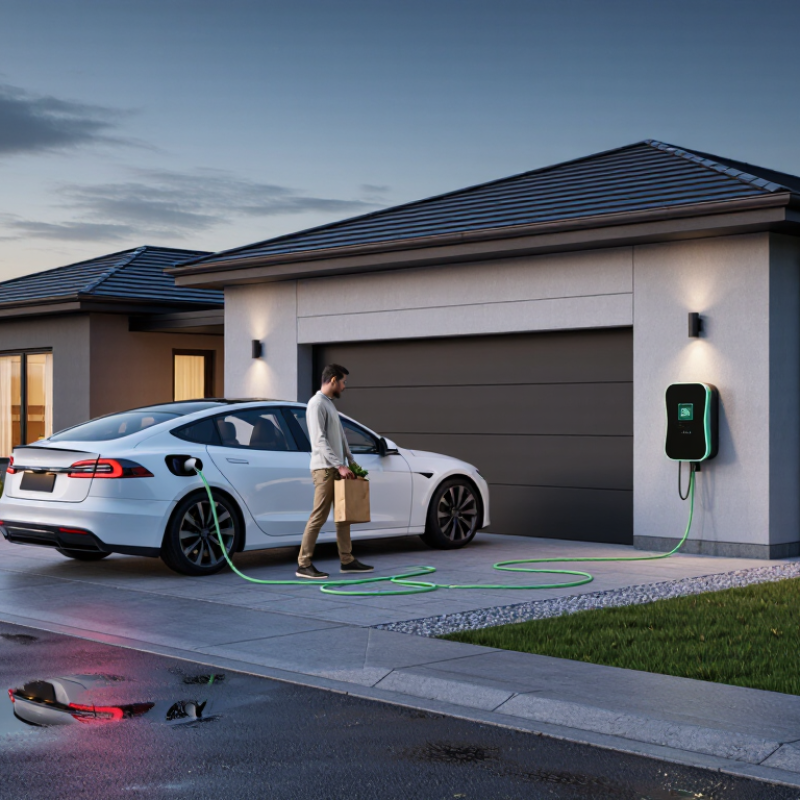
Small details count. Picture carrying groceries past a charging cable on a rainy evening. Check cable length, weather protection, controls, warranty terms, and whether the station can schedule charging. Compare installation needs, too; a capable unit may still require electrical work. Local requirements vary, so confirm installation details with a qualified professional. That step is easy to overlook.
There is no perfect setup. Even careful buyers can misjudge cable reach or future needs. Use this guide to compare the practical trade-offs, spot questions worth asking, and choose a Home Charging Station that suits your home—not just the product page.
Understanding Your Vehicle’s Home-Charging Needs
Understanding your vehicle’s home-charging needs starts with your daily routine, not the charger’s maximum rating. Estimate how many miles you drive between plug-ins, then check the vehicle manual for its AC charging limit and connector requirements. Battery size matters, but it does not tell the whole story. A car that accepts only modest AC power will not charge faster when paired with a more powerful station.
The U.S. Department of Energy’s Alternative Fuels Data Center gives typical charging rates of 2–5 miles per hour for Level 1 and 10–30 miles per hour for Level 2. These are broad estimates, not promises: vehicle efficiency, temperature, and electrical supply all affect the result. If your commute is 35 miles, overnight Level 1 may be sufficient; a longer daily drive or a short parking window may make Level 2 more practical. Check the home circuit and available capacity with a qualified electrician before choosing equipment. Small details matter.
Also consider when the car sits parked. A 10-hour overnight window can meet different needs than a two-hour stop between shifts. One easy mistake is buying for a rare road-trip week instead of ordinary use. Still, ordinary use can change. Compare your actual weekly mileage with the vehicle’s charging limit, and leave room for cold-weather range loss; the estimate may feel less exact than expected.
Checking Connector Compatibility and Charging Standards
When choosing a home charging station, match its connector to your vehicle’s inlet—not just the outlet in your garage. In North America, many vehicles use J1772 for AC charging, while newer models may use the SAE J3400 connector. In Europe, Type 2 is common for AC charging. Check your vehicle manual and the charger’s certified specifications; an adapter may help, but it does not increase the vehicle’s maximum charging rate. Small detail, big frustration.
Also check the charging standard and electrical limits. IEC 61851 covers conductive charging systems, while IEC 62196 specifies plugs and vehicle connectors. The International Energy Agency reported that public charging points grew by over 40% in 2023; fast chargers grew 55%, compared with 27% for slow chargers (Global EV Outlook 2024). That expansion makes connector choices more visible, but home charging is usually AC, so verify the station’s voltage, amperage, and your vehicle’s onboard charger capacity. A higher-rated unit cannot force a car to accept more power. I would still double-check compatibility with the vehicle maker’s documentation; product listings can be vague.
How to Choose a Home Charging Station in 2026?
Typical AC charging power by supply configuration
Values are nominal power calculated as voltage × current. Actual charging speed may be lower, depending on the vehicle’s onboard charger, the electrical installation and household load management. Before choosing a station, confirm that its connector matches your vehicle: common AC standards include J1772 and SAE J3400 in North America, and Type 2 (IEC 62196-2) in Europe. Regional availability and vehicle compatibility vary.
Matching Charger Power to Your Home’s Electrical Capacity
A home charger should fit the electrical capacity you actually have, not just the vehicle’s maximum charging rate. The U.S. Department of Energy’s Alternative Fuels Data Center reports that Level 2 equipment uses 208 or 240 volts and commonly adds about 10–20 miles of range per hour. Actual results vary by vehicle and conditions. More power is not always better.
Check the panel’s available capacity, not only its main breaker rating. An oven, dryer, heat pump, and charger can compete for capacity during a cold evening. A 32-amp charger at 240 volts uses about 7.7 kilowatts; in North American installations, it typically needs a 40-amp circuit under continuous-load sizing rules. Confirm local requirements with a licensed electrician. A load calculation can show whether the panel supports that circuit or needs managed charging. Small detail, big difference. I would not choose a charger before that check. The DOE’s figures describe charging capability, not a promise of overnight range, so match the setting to your daily mileage and the home’s measured electrical load.
How to Choose a Home Charging Station in 2026? — Matching Charger Power to Your Home’s Electrical Capacity
The power figures are approximate and calculated at a nominal 240 V (voltage × current). EV charging is generally treated as a continuous load; under common North American requirements, the circuit is typically sized at 125% of the charging current. Actual requirements vary by location and installation. Have a qualified electrician check the home’s service load, panel, wiring, and local code before choosing or installing a charger. The vehicle’s onboard AC charger may also limit charging speed.
Comparing Safety, Smart Features, and Installation Requirements
A home charging station should fit your electrical system, not just your car. Check that the unit carries safety certification accepted in your area, and confirm its protection features with the installation guide. Ground-fault protection and temperature monitoring can help detect problems, but they do not replace correct wiring. Small detail, big difference. If the cable crosses a walkway or sits in winter slush, placement and weather protection matter.
Smart features are useful when they solve a real household need. Scheduling can shift charging to quieter hours, while load management can reduce strain when ovens, dryers, and vehicle charging run together. Energy reports may help explain costs, though readings can differ from your utility bill. App controls also depend on a stable connection. A polished screen is not a safety feature, and it is easy to overvalue one.
Before choosing, ask a qualified electrician to assess the panel, circuit capacity, cable route, and mounting location. A detached garage or long driveway may change the installation cost considerably. Ask whether permits or utility coordination apply locally; requirements vary. Request a written estimate that separates equipment, labor, and possible panel upgrades. A compact charger may look simple on a wall, but the unseen wiring often decides what is practical.
Evaluating Total Costs, Incentives, and Future Flexibility
A home charging station’s price is only one part of the bill. Include installation, wiring, permits, and any panel upgrades when comparing options. A licensed electrician can assess whether your existing panel has room for the added load. A neat-looking quote may not include a long cable run from the panel to the driveway.
Incentives can reduce the upfront cost, but eligibility and funding change by location and over time. Check current government and utility program details before counting a rebate in your budget. Also compare electricity rates: charging overnight may cost less where time-based pricing is available. That adds up. Still, don’t assume a lower purchase price means lower ownership costs; installation and charging habits matter too.
Think about the next few years, not only the car in your garage today. A station with adjustable charging power or load management may suit a future vehicle or a busy household. Check cable reach, weather rating for the installation location, and whether the system can receive software updates. More features are not automatically better. I’d weigh flexibility against added cost—and admit that predicting future needs is imperfect. A simple setup that fits your panel and daily routine may be the more sensible choice.